Sunday, April 12, 2020

नर्तक अथवा नर्तकीचे गुण व दोष


भारतीय शास्त्रीय नृत्याचे सादरीकरण हे परंपरेने एकल म्हणजे सोलो केले जाते. शिवाय, एकल असो अथवा समूह, आजही शास्त्रीय नृत्य सादरीकरणात बहुतेक शैलींमध्ये आहार्य अभिनयाचा (कॉस्च्युम, प्रॉपर्टी, बॅकड्रॉप इ.) फ़ारच कमी वापर केला जातो. सादरीकरणात साथसंगतही मोजकी घेतली जाते आणि नर्तकच सादरीकरणाचे नेतृत्व करत असतो.
कथकच्या बाबतीत तर हा मुद्दा अधिकच अधोरेखित होतो, याचे कारण म्हणजे एकतर कथकच्या वेशभूषेतील साधेपणा आणि दुसरे म्हणजे कथकच्या सादरीकरणाचे बऱ्यापैकी अनिबद्ध रूप. अनिबद्धतेमुळे सादरीकरणात उपज भाग बऱ्यापैकी असतो. यामुळे कथकशैलीच्या बाबतीत सादरीकरणाची एकूण जबाबदारी पुष्कळ प्रमाणात नर्तकावरच असते, त्यामुळे एखाद्या कथक सादरीकरणाची समीक्षा किंवा त्यातील गुण-दोषांची चर्चा म्हणजे खरंतर नर्तकाच्याच गुणदोषांची चर्चा असते. म्हणूनच नर्तकाच्या गुणदोषांच्या चर्चेला शास्त्रकारांनीही महत्त्व दिले आहे. आजच्या नर्तक होण्याची मनीषा असणाऱ्या विद्यार्थ्यांपासून, नर्तक म्हणून व्यावसायिक कार्य करणाऱ्यांपर्यंत आणि नर्तक घडविणाऱ्या आचार्यांपर्यंत हा विचार आवश्यक आहे की, कोणाला आदर्श नर्तक म्हणावे, कोणते गुण नर्तकात अनिवार्यपणे असलेच पाहिजेत, कोणते गुण अनिवार्य नाहीत पण नर्तकाला उंचीवर नेणारे आहेत आणि कोणते दोष नर्तकाच्या गुणांना मातीमोल करणारे आहेत.
अभिनयदर्पणात नर्तकलक्षणांचा स्वतंत्र विचार नसला तरी पात्रलक्षणे दिली आहेत ज्यात नट व नर्तकाच्या गुणांची एकत्रित चर्चा केली आहे. संगीतसमयसार, नर्तननिर्णय, नृत्तरत्नावली अशा नंतरच्या ग्रंथांमध्ये नर्तक व नर्तकी दोघांच्या गुणदोषांची स्वतंत्र चर्चा दिसते.
शास्त्रात सांगितलेल्या गुणांपैकी काही गुण नर्तकाला अंगभूत असणे आवश्यक आहे तर काही तालमीतून प्राप्त होतात तर काही अथक रियाजातून प्राप्त करावे लागतात. पुढील काही गुण शास्त्रकारांनी सांगितले आहेत:

1. तालीम (सुविद्यता): 

उत्तम गुरूंकडून नृत्याची विधिवत तालीम घेतलेली असणे नर्तकासाठी अनिवार्य आहे. आजच्या तंत्रज्ञान क्रांतीच्या क्षेत्रात अनेक नृत्य प्रकार  युट्यूब व्हिडिओ ट्युटोरियलच्या माध्यमातून शिकण्याची सोय असली तरी शास्त्रीय नृत्य कला याला सन्माननीय अपवाद म्हणता येईल. आजही “सीना-बसीना”, प्रत्यक्ष गुरूंकडून शिकण्याला पर्याय नाही.
याखेरीज, शास्त्रीय नृत्यकलेत, आजीवन विद्यार्थी-दशा सांगितली आहे. व्यावसायिक नर्तक, अध्यापक म्हणून कार्य सुरू केल्यावरही, तुमची तालीम सुरूच राहिली पाहिजे तरच, तुमच्या नृत्यात आणि नृत्य-अध्यापनात चैतन्य टिकून राहील. अशा प्रकारे पद्धतशीर तालीम आणि आजीवन तालीम हा नर्तकाचा पहिला अनिवार्य गुण म्हणता येईल.
2. रियाज (श्रमित्वं) – 
नियमित रियाजाने नर्तकाने आपल्या हस्तक, अंगसंचलनात वेग आणि अचूकता (perfection) प्राप्त केली पाहिजे. अथक रियाजाने पायातून प्रत्येक बोल स्पष्ट काढला पाहिजे (चरणन्यासचातुर्य), यासोबत “वलनं वर्तनं गात्रे” (नृत्याच्या हालचालींमध्ये गोलाई असणे) हाही एक गुण आवश्यक मानला आहे. रियाजाने प्रत्येक हालचाल लालित्य आणि सौंदर्यपूर्ण होणे ज्याला कथकमध्ये तोड-मरोड म्हटले जाते.
3. अभिनयकौशल्य (सर्वाभिनयनेतृता)
नर्तकाला डोळे, भुवया, हास्य इ. द्वारे चेहऱ्यातून तसेच एकूणच शारीर भाषेतून सर्व प्रकारच्या व्यक्तिरेखा, सर्व रस तेवढयाच ताकदीने सादर करता यायला हवेत. अभिनय कौशल्य प्राप्त करण्यासाठी गुरूंचे मार्गदर्शन, अभिनयाचा रियाज, त्याचबरोबर नर्तकाचा स्वतःचा विचार आणि अभ्यास आवश्यक आहे.
4. लय-ताल-ज्ञान : 
लय पक्की असणे, लयीची समज असणे कलाकारासाठी आवश्यक आहे. कथक नर्तकासाठी तर लेहऱ्यावर विविध लयीच्या रचना सादर करण्यासाठी, लेहऱ्याची उत्तम समज असण्यासाठी तर लय पक्की हवीच त्याचबरोबर पढंत चांगली होण्यासाठीही लय स्थिर असणे आवश्यक आहे. लयीची समज खास करून सूक्ष्म लयीची समज ही उपजत असावी लागते, मात्र अभ्यासानेसुद्धा लय पक्की होते.
कथक नर्तकाला लयी सोबत, तालचक्राचा एकूण आराखडा, सम, खाली, भरीसह डोळ्यासमोर असणे आवश्यक आहे. लय तालाच्या ज्ञानाबरोबरच विविध जाती, यती, ग्रह (अतीत-अनागत) वगैरे तांत्रिक बारकाव्यांचे ज्ञान असणे आवश्यक आहे.

5. प्रयोगशीलता (कलाभिज्ञा विद्याभीष्टप्रयोगज्ञा)
शास्त्राच्या चौकटीत राहूनही काळानुसार, प्रेक्षकांनुसार, विषयानुसार नवनवीन प्रयोग करायची क्षमता नर्तकात असायला हवी. त्याचबरोबर नवीन प्रयोग केवळ धाडसाने नव्हे तर त्याजोडीला सखोल अभ्यास करून सादर करायची क्षमता असणे आवश्यक आहे.

6. सादरीकरणातील सफ़ाई: (सभाजय)-
सभेला म्हणजेच प्रेक्षकांना जिंकून घेण्याचा गुण नर्तकात आवश्यक आहे, याला आजच्या भाषेत प्रेझेन्टेशन स्किल म्हणता येईल. नर्तक कधी नृत्यातील अंगसंचलनातील बारकाव्याने, कधी अफ़ाट वेगाच्या तत्कारांनी तर कधी, पायातून वेगवेगळे नाद काढून, कधी अद्भुत गिरक्या, आकाशचारी सारख्या उड्या/छलांग अशा प्रेक्षकांना आवडीच्या गोष्टी नृत्यात घालून प्रेक्षकांना अचंबित करेल. आजच्या प्रेक्षकांचा विचार करता, entertainment quotient च्या, शास्त्रीय नर्तकालाही या प्रेक्षकांना अचंबित करणाऱ्या या गोष्टी सादर करणे आवश्यक आहे. कथक नर्तकासाठी प्रेझेन्टेशनचा भाग म्हणजे चेहरा नृत्तांगातही भावपूर्ण, प्रसन्न ठेवणे (स्मितपूर्वकृतालापा) आणि त्याहूनही महत्त्वाचा गुण म्हणजे नजर बांधणे ज्याला eye-contact म्हटले जाते. शास्त्रकारांनी या गुणाला ’सुतारा’ म्हटले आहे.

7. उपज-क्षमता (सुबुद्धित्वम्) 
कथकच्या ताल आणि भावांगात नर्तकाला आयत्यावेळी काही क्षणात विचार करून उपज सादरीकरण करता आले पाहिजे. उपज क्षमता ही दीर्घ अनुभवानंतर आणि उपजच्या अशा स्वतंत्र अभ्यासानंतर प्राप्त होते.

8. भाव-अखंड राखणे व अष्टावधान (अत्रुटद् -रसता) : 
नाटकाच्या भाषेत याल बेअरिंग न सोडणॆ म्हणता येईल. लाईव्ह-म्युझिक म्हणजेच साथीदारांसह सादरीकरण करताना, एकाचवेळी स्वतःचे नृत्य आणि साथीदारांचे नेतृत्व अशी तारेवरची कसरत करतानाही, नर्तकाने आपले तालांग आणि विशेषतः भाव अंगाचे बेअरिंग न सोडणे, भाव अखंड व्यक्त करणे हे कसोटीचे असते. याला जोडूनच कलाकाराला अष्टावधान हा गुणही आवश्यक आहे. साथीदारांशी जमवून घेत, नृत्यात प्राण ओतून, त्याचवेळी, वेशभूषा इ. सावरून, प्रेक्षकांच्या प्रतिसादाचे भान ठेवून, असे बहु-अवधाने ठेवून सादरीकरण करतो तोच खरा उत्तम नर्तक होय.

9. आरंभामोक्ष विज्ञत्वं - 
शास्त्रात शतकांपूर्वी सांगितलेला गुण आजही प्रत्येक नर्तकात आवश्यक आहे. आपल्या सादरीकरणाची सुरुवात प्रभावी आणि शेवट क्लायमॅक्सला नेणारा कसा करावा याची समज असणे हा नर्तकासाठी मोठा गुण ठरतो. सादरीकरण कुठे थांबवायचे म्हणजे रटाळ होणार नाही याची अचूक समज असणे हा प्रगल्भ कलाकाराचा गुण आहे. यालाच जोडून आणखी एक गुण शास्त्रकारांनी सांगितला आहे तो म्हणजे- आपल्या गुणदोषांची पूर्ण जाणीव असणे आणि त्यानुसार सादरीकरणात गुण अधिक अधोरेखित करणे आणि दोषपूर्ण अंग टाळता येणे.

10. कुतुहल: 
अन्य शैलींबद्दल तसेच वर्तमानात  देशविदेशात चालू असलेल्या अन्य प्रयोगांबद्दल कुतुहल असणे व त्यांची माहिती करून घेणे हा कलाकाराला प्रगल्भ बनवणारा गुण आहे
11. गीत-वाद्याची समज (गीतवाद्यानुकारित्व) 
लाईव्ह म्युझिक म्हणजेच साथीदारांसह सादरीकरण करताना टीम म्हणून काम करणे, साथीदार कलाकारांच्या ज्येष्ठतेनुसार त्यांच्याप्रती मंचावर आदर व्यक्त करणे, नर्तक मुख्य आणि साथीदार गौण अशी भावना टाळून एक संच म्हणून, टीम म्हणून काम करणे हा आजच्या काळात नर्तकासाठी महत्त्वाचा गुण आहे.
त्याचबरोबर स्वतः नर्तकाला गीत व वाद्याची माहिती असणे, गायन-वादनाची तालीम घेतलेली असणे हा एक उपकारक गुण ठरतो. अनेक मान्यवर कथक नर्तक उत्तम तबला वादक व गायक होते, आजही आहेत. ’स्वयं गा कर प्रस्तुती’ हे अत्यंत कौशल्याचे समजले जाते. शास्त्रकारांनी मधुरस्वरा म्हणजेच गायनही अवगत असलेल्या नर्तकीला सर्वश्रेष्ठ मानले आहे. नृत्तरत्नावलीमध्ये तर म्हटले आहे, नर्तकी गायनी स्याच्चेत् भोगिनी पात्रमन्यथा॥
नर्तकी जर गायिका सुद्धा असेल तर तिची बातच और!

12. शारीरिक गुण
नर्तकापेक्षा नर्तकीच्या बाबतीत खरं तर शास्त्रकारांनी शारीर गुणांची चर्चा वरील सर्व गुणांच्या आधी केली आहे. नृत्य ही दृश्य कला असल्यामुळे, सादरीकरणात शरीर हे मुख्य माध्यम असते त्यामुळे नर्तक किंवा नर्तकीचे शरीर सुडौल असायला हवे. फ़ार उंच नको किंवा फ़ार बुटका नको. गोरा असो अथवा सावळा, चेहरा भावदर्शी म्हणजेच expressive असावा. कोणतेही शारीरिक व्यंग नसावे. मात्र नृत्तरत्नावलीत जायसेनाने या शारीर गुणांच्या बाबतीत उदार दृष्टिकोण घेतलेला आहे.
रूपयौवनयुक्तानां सहस्रेऽपि मृगीदृशाम्।
कलागुणसमेतानां नर्तकी नैव लक्ष्यते।
सौंदर्य असलेल्या हजार नर्तकींपेक्षा कलेमध्ये प्रावीण्य मिळवलेली नर्तकी श्रेष्ठ. आजच्या काळातही हे तेवढेच सत्य आहे, कारण शारीर लावण्य विशेष नसूनही कलेमध्ये उंची गाठलेले अनेक कलाकार आपण पाहतो.
13. अध्यापन कौशल्य:
 शास्त्रकारांनी हा गुण केवळ पुरूष नर्तकांमध्येच आवश्यक मानला आहे, कारण परंपरेने पुरुष नर्तकांना, पुढे आचार्य किंवा गुरू रूपात पाहिले आहे, स्त्री नर्तकीला नेहमीच performer रूपात पाहिले आहे. मात्र आज एकविसाव्या शतकातील शास्त्रीय नर्तनाचे क्षेत्र पाहता, अध्यापन कौशल्य व शिष्य तयार करण्याची क्षमता प्रत्येकच नर्तकात असणे आज आवश्यक झाले आहे
शास्त्रकारांनी या नृत्यकलेशी संबंधित गुणांखेरीज काही सामान्य गुणही नर्तकांमध्ये आवश्यक मानले आहेत, जसे विनम्रता, निर्व्यसनीपणा ई.
या परंपरेने सांगितलेल्या गुणांखेरीज अन्यही काही गुण आजच्या काळाच्या दृष्टीने या यादीत समाविष्ट करावेसे वाटतात. ते पुढीलप्रमाणे:
14. तंत्रज्ञानाचा योग्य उपयोग: 

तंत्रज्ञानक्रांतीच्या या काळात शास्त्रीय कलाकाराने आधुनिक तंत्रज्ञानाची माहिती करून घेतली पाहिजे व त्याचा परिपूर्ण उपयोग केला पाहिजे. कथक नर्तकांसाठी यात, लेहऱ्याच्या applications पासून, रेकॉर्डिंगची माहिती असणे, सोशल मिडियाचा प्रभावी वापर करता येणे असे अनेक गुण अपेक्षित आहेत.


2. उदारमतवादी असणे: आज कथकचा प्रसार व नवीन प्रयोग प्रचंड होत आहेत. अशा काळात, आपल्याहून भिन्न शैली, घराणे आणि भिन्न मत असलेल्या नर्तकांप्रती आदराची भावना नर्तकामध्ये असणे आवश्यक गुण आहे.

दोष:
बहुतेक शास्त्रकारांनी दोषांची तपशीलवार चर्चा केली नाही तर गुण विशद केल्यावर, या गुणांचा अभाव असणे म्हणजेच दोष असे नमूद केले आहे. तरीही लय-तालातील कमी-अधिकपणा लक्षातच न येणे, शरीरातील व्यंग, रियाजाचा आळस, व्यसनांच्या आहारी जाणे, उपज सादर करण्याचे प्रसंगावधान नसणे असे काही दोष नमूद केले आहेत. या दोषांखेरीज आजच्या काळानुरूप अन्यही काही दोष येथे नमूद करावेसे वाटतात जे आजच्या उत्तम नर्तकांनी टाळले आहेत.

1. परंपरा आणि आधुनिक प्रवाह यातील कोणतेतरी टोक गाठणे:
परंपरेचा आंधळा आग्रह नर्तकाच्या नृत्याला साचलेपणा देतो. प्रेक्षकांसाठी बदलत्या काळानुसार, परंपरेच्या चौकटीतच सौंदर्यपूर्ण बदल करण्याची मानसिकता नसणे, हा आजच्या काळासाठी मोठा दोष खरा. आणि त्याचबरोबर, परंपरेला बासनात गुंडाळून आधुनिकतेच्या नावाखाली, कोणत्याही गोष्टींना आपल्या शैलीत घुसवणे हा त्याहून मोठा दोष समजला पाहिजे.

2. काल्पनिक स्टारडम आणि त्यातून येणारी अव्यावसायिकता:
शास्त्रीय कलेकडे समाजाने नेहमीच पूजनीय व दिव्य मानले आहे. मात्र अनेकदा कलाकार गल्लत करून दिव्य कलेऐवजी व्यक्ती म्हणून स्वतःला अधिक दिव्य आणि असामान्य समजून बसतो. मग त्यामुळे, प्रामाणिक कला-साधनेपेक्षा, आपले महत्त्व प्रस्थापित करणे, प्रेक्षकांना तुच्छ लेखणे, अध्यापन सचोटीने न करणे, कार्यक्रमाच्या वेळा, तांत्रिक बाजू न सांभाळणे, अशा दोषांना तो कलेच्या पांघरूणाखाली लपवायला पाहतो. मात्र, आजच्या ज्येष्ठ कलाकारांनी या दोषांना लांब ठेवल्यामुळेच कलेचे शिखर गाठले आहे.

असं म्हणतात की गती ही निश्चित आहे, तुम्ही पुढे जात नसाल तर तुम्ही मागे राहता. कलावंताचा प्रवास, गुण जोपासण्यामुळे आणि दोष टाळल्यामुळेच शिखराच्या दिशेने होईल, अन्यथा काही न करताही तोच प्रवास गर्तेच्या दिशेने असेल.


Wednesday, April 1, 2020

रास आणि कथक:


कृष्णरूप साकारताना रासधारी
भारतीय कला परंपरेत अनेक कला प्रकार कृष्णचरित्रावर जोपासले आहेत. प्राचीन भारतीय नाट्यकलाही त्यांपैकीच एक. रास किंवा रासलीलाही असाच लोक-नाट्याचा एक प्रकार जो कृष्ण-कीर्तनातून निर्माण झाला आणि कृष्णभक्तीमुळे बहरला. आज रास किंवा रासलीला या सामान्य नावाचा कलाप्रकार सौराष्ट्रापासून मणिपूरपर्यंत आणि थेट दक्षिणेत तामिळनाडूपर्यंत अनेक राज्यांत वेगवेगळ्या रूपांमध्ये प्रचलित झालेला दिसतो, अर्थात या सर्व प्रकारांमध्ये कृष्ण-कथा-कीर्तनाचा अंतरात्मा समान आहे. मात्र आज या लेखात वृंदावनात जन्मलेल्या आणि बहरलेल्या “ब्रज की रासलीला” या नाट्य-प्रकाराचा विचार कथकच्या संबंधाने करणार आहोत.

रास: प्राचीनता

रास याची व्याख्या शास्त्रकारांनी ’रसांना समूहो रास:’ अर्थात, विविध रसांचे मिश्रण असलेले सादरीकरण अशी केली आहे. रास हा शब्द संस्कृत नव्हे तर रास शब्द आणि रास नृत्य दोन्ही मूळात देसी आहेत. रास याच नावाचा एक देसी ताल तसेच एक देसी काव्यछंद आहे. (तेत्तिगिध इति शब्देन नर्तनं रासतालतः।- भरतकोश). रास या नृत्यप्रकाराचा उल्लेख नाट्यशास्त्रापासून सापडतो. मुख्य दहा नाट्यभेद म्हणजेच दशरूपके सांगितल्यावर भरताने अनेक उपरूपके सांगितली आहेत. ही उपरूपके म्हणजे लहान नाट्यप्रकार ज्यात नृत्य आणि नाट्याचं मिश्रण असेल. रास किंवा रासक याचा उल्लेख असे एक उपरूपक म्हणून येतो. भरतोत्तर काळात, याचे नृत्यरासक (नृत्यावर अधिक भर) आणि नाट्यरासक (नाट्यावर अधिक भर) असे उप-प्रकारही केलेले दिसतात. आजच्या रासलीलेमध्ये या दोन्ही प्रकारांचे उत्तम मिश्रण दिसून येते. हल्लीसक हे उपरूपकही रासनृत्याशी साधर्म्य असलेले आहे.

भागवतातील रासलीलेच्या उगमाची कथा:
श्रीमद्भागवतपुराणात वृंदावनातील रासलीलेच्या उगमाची कथा सांगितली आहे. शरद पौर्णिमेच्या रात्री श्रीकृष्णाने यमुनेच्या तीरावर गोपींना रासक्रीडेसाठी आमंत्रित केले. मात्र रासक्रीडा रंगात आली असतानाच, कृष्ण अदृश्य झाला, त्याच्या विरहात व्याकूळ झालेल्या गोपी त्याच्या सहवासातील सुंदर क्षण आठवू लागल्या. श्रीकृष्णलीला आठवून, त्यांचे नाट्यमय रूप सादर करून त्याद्वारे त्या कृष्णालाच अनुभवू लागल्या. इथूनच कृष्ण-कथा नाट्यातून रासलीलेची सुरुवात झाली. या पौराणिक कथेतून रासलीलेच्या परिवर्तनाविषयी निष्कर्ष काढता येईल. कथेनुसार रासलीलेचे दोन भाग आहेत, पहिला भाग कृष्णाने स्वतः सुरू केलेला, म्हणजेच हे रासलीलेचे प्राचीन रूप. तसेच दुसरा भाग, गोपींनी म्हणजेच भक्तांनी निर्माण केलेला. आजच्या रासलीलेत असे दोन भाग स्पष्ट दिसतात. पहिला नित्य रास (कदाचित नृत्य चे अपभ्रंशित रूप) जे प्राचीन रूप आहे आणि दुसरा लीला-भाग जो, रासलीलेच्या पुनरूज्जीवनाच्या काळात त्यात नव्याने घातला गेला.

रास: ऱ्हास आणि कथकच्या छायेत पुनरुज्जीवन

इस्लामी राजवटींच्या काळात, रास किंवा रासक नृत्याचा ऱ्हास झाला. भक्तिपूर्ण अशा प्रकारात प्रेक्षकांच्या अभिरुचीप्रमाणे, शृंगार आला, चमत्कृती आली, आणि रासचे मूळ रूप लोप पावत चालले. असे म्हणतात की नवाब वाजिद अली शहांनी रास नृत्याला अनुसरूनच नृत्यनाट्याची निर्मिती केली ज्याचे नाव त्यांनी रहस ठेवले. रहस हे रासचेच शृंगारप्रधान रूप होते.

आज जी रासलीला प्रचलित आहे, तिचे पुनरुज्जीवन 15 व्या शतकात वृंदावनात झाले. याच काळात उत्तर भारतात भक्ती संप्रदायाची लाट आली होती आणि प्रत्येक कलाप्रकार भक्तिरंगात न्हाऊन निघत होता. याच काळात ब्रज रासलीलेला वैष्णव आचार्यांनी नव संजीवनी दिली. वल्लभाचार्य, स्वामी हरिदास, हितहरिवंशी, घमंडाचार्य, श्री नारायण भट्ट अशा अनेक आचार्यांची नावे घेता येतील. रासलीला या काळात नवीन रूपात बहरली. याच काळात उदयाला आलेल्या अष्टछाप कवींच्या काव्यामुळे रासलीलेतही समृद्ध साहित्याची भर पडली. आता रासलीला हे केवळ लोकनाट्य न राहता, सकस साहित्याने समृद्ध, सुंदर नृत्याने युक्त, अनेक गीतीप्रकारांनी सजलेला असा एक प्रगल्भ नृत्य-नाट्यप्रकार बनला होता. ध्रुपद शैलीतील संगीताचा वापर तर यात आधीपासून होताच त्यात आता ब्रजसाहित्यातील अनेक पदे, सवैय्या, विष्णुपदे, कवित्त, छंद यांची भर पडली. आचार्यांनी रासलीलेतील नृत्यास अधिक सुसंस्कृत बनविण्यासाठी तत्कालीन मंदिर व दरबारांमधील नृत्य-गुरूंना आमंत्रित केले. हे नृत्यगुरू उत्तर भारतात कथकचे किंवा नेमके सांगायचे तर कथकच्या पूर्व अशा शैलीचे प्रचालन व प्रशिक्षण करत असणार. या नृत्याचार्यांनी रासधारींना नृत्याचे शिक्षण तर दिलेच पण एकूणच रासलीलेतील नृत्य-भागाचे पुनरुत्थान केले. याचे प्रतिबिंब गोचरण-लीलेत दिसून येते, जेव्हा तोष नावाचा गोप कृष्णाला नृत्याचे प्रशिक्षण देतो तेव्हा कथकच्या प्रचलित आरंभीच्या बोलापासून, तत् तत् थुं थुं पासून सुरुवात करतो.

रासलीलेतील नृत्य भागाचे श्रेय श्रीवल्लभ यांना दिले जाते. हे वल्लभ स्वतः नृत्याचार्य असून राजस्थान दरबारात होते. कथकमध्येही वल्लभ हे नाव येते, अनेक कवित्तांच्या रचना यांच्या नावाने, नटुआ-वल्लभ या नावाने आहेत. रास लीलेत पूर्वीपासून प्रचलित असलेले अनेक परमेलू किंव परमूल (बहुतेक ठिकाणी परमूल हा शब्द वापरला आहे) आजही कथकच्या जयपूर घराण्यात प्रसिद्ध आहेत. रासचा मूळातला उल्लेख हा नृत्त म्हणून आहे किंवा काहीवेळा नृत्य म्हणून आहे. रासलीलेचे पुनरुज्जीवन झाले तेव्हा नव्या रूपात, मूळच्या नृत्यानंतर नाट्याचाही भाग जोडला गेला. आज रासलीलेच्या सादरीकरणात सुरूवातीला जुन्या पद्धतीप्रमाणॆ नृत्य असते आणि मध्यंतरानंतर रासमंडळी एखाद्या कृष्णलीलेचे नाट्य सादर करतात. रासमंडळींसह या नव्या रूपाच्या बांधणीत जे कथाकार सहभागी झाले होते, त्यांचा हा नाट्यभाग रासलीलेत नव्याने सुरू करण्यात नक्कीच मोठा हातभार लागला असणार. कथकारांकडे कथा-कीर्तनाची परंपरा होतीच, मात्र दरबारात आवडेल असे नृत्य करताना कथकारांचे प्राचीन नाट्यमय कथाकथनाचे रूप मागे पडले होते. ते हरवलेले नाट्यरूप रासलीलेत कथकारांनी शोधायचा प्रयत्न केला असणार.

अशा प्रकारे, कथकारांनी रासलीलेतील नृत्याचे लालित्य तर वाढवलेच पण त्याचबरोबर आपली हरवत चाललेली कथाकीर्तनाची परंपरा रासलीलेत नव्याने रोवण्याचा प्रयत्न केला.

रासलीला – सादरीकरणाचे स्वरूप

रासलीलेची सुरुवात मंगलाने होते. रासमंडलीचा स्वामी मंगलाचरणाचे गायन करतो. त्यानंतर बाकी मंडलीतील गायकही वातावरण निर्मितीसाठी वेगवेगळी पदे गातात. मंगलात यानंतर मध्यभागी बसलेल्या राधाकृष्णांची आरती केली जाते. यानंतर सर्वांच्या विनंतीनंतर राध आणि कृष्ण गोपीमंडलात येतात रासलीलेचा नृत्त भाग सुरू होतो. यात कृष्ण, राधा आणि इतर गोपी एकल रूपात विविध परमूलांचे सादरीकरण करतात. या परमूलांचे  बोल आणि कथकचे बोल यांत खूप साधर्म्य आहे. श्रीराधाकृष्णलीला प्रसंगातील हा परमूल पहा:

ता तिधा थेई थेई ताथेई - ता तिधा थेई थेई ताथेई
ता तिधा थेइयता - ता तिधा थेइयता
थेई ऽ ऽ ऽ त त त ता, थेई ऽ ऽ ऽ त त त ता

या परमूलाला कथकचा तुकडा म्हणता येईल, इतके बोलसाधर्म्य आहे. अनेक परमूल किंवा परमेलू असे आहेत, की जे कथकमधील परमेलूच्या व्याख्येत बसतात. जसे हा परमेलू:

तकिट तकिट धिलांग धिक तक तो दीम ताम
ता तू त्रंग थुन थुन तो, धिक तू त्रंग, थुन थुन तो
ता तूंग तूंग धिक तूंग तूंग धिकतक
थुंग थुंग तक थुंग थुंग तक, थोंग तक थोंग तक ददिगिन थेई
तततता थेई तततता थेई तततता थेई

इथे रासमधील नृत्ताचा भाग संपतो, काही वेळा याच भागात, मयूर नृत्य (पिसारा घेऊन गुडघ्यांवर फ़िरून केलेले नृत्य), दंड रासक (टिपऱ्या घेउन) असे रंजक प्रकारही केले जातात.
या नृत्त भागानंतर, एक मध्यंतर येते, त्यातही भक्तियुक्त पदांचे गायन केले जाते. या मध्यंतरानंतर कृष्णलीलेचा भाग सुरू होतो. या भागात मंडली नृत्य, गायन, नाट्यातून एखादा कृष्णलीलेचे नाट्यमय सादरीकरण करतात. रासलीलेत सादर केले जाणारे कृष्णलीलेचे प्रसंग बहुतेकदा पुराणांमधले असतात, त्याचबरोबर पुराणांमधील प्रसिद्ध कथांचे लोकसाहित्यातले वेगळे रूपही पहायला मिळते तर कधी पूर्णपणे नवीन कथाही सादर केल्या जातात, जसे राधा व कृष्णाचा वाङ्‍निश्चय.

रास आणि कथक:

रास आणि कथक कृष्णकीर्तनातून निर्माण झालेल्या या दोन्ही नृत्य प्रकारांमध्ये अनेक साधर्म्ये आहेत. चारी, मंडले, हस्तक याबाबतीत तर काही प्रमाणात साधर्म्य दिसतेच. तसेच अनेक पारिभाषिक शब्द जसे, सुढंग, लाँग-डाँट, उरप-तिरप हे रासमध्येही प्रचलित आहेत, अनेक परमूलांमध्ये ते वापरले जातात तसेच त्यांचे अर्थही जवळपास सारखे आहेत. हरिव्यासदेवाचार्यांचा हा छंद पहा:
सुढंग हस्तक :
स्रोत: रासलीला तथा रासानुकरण विकास

रासमंडल मधि निर्तत मोहनी मोहन, वृंदावन नवनिकुंज सुंदर आनंदघन।
लाग दाट उरप तिरप उघटत संगीत सुलप, राग रंग तान मान गान सुघर सप्त सुरन॥

अंगसाधर्म्यही काही प्रमाणात आहे. त्रान हा बोल उडी मारून करणे, सुढंगचे थाटसारखे अंग इ.
रास आणि कथकमध्ये परस्पर-देवाणघेवाण असलेले नाते आहे असे म्हणता येईल. रासच्या प्राचीन रूपातील परमेलू, तुकडे पुढे इतके प्रसिद्ध झाले की स्वतंत्र रचना म्हणून केले जाऊ लागले, कथकमध्ये हे परमेलू केले जाऊ लागले. याउलट, रासच्या पुनरुत्थानात कथक आचार्यांनी हातभार लावला आणि रासलीलेतील नृत्य भागास लालित्यपूर्ण बनवले. तत्कालीन राजाश्रयाला असलेल्या कथकारांना दरबारात आवडेल असे सादरीकरण करताना आपल्या कथाकीर्तन रूपाला मागे ठेवावे लागत असे आणि चमत्कृतीवरच भर द्यावा लागत असे. त्यांनी मग लोप पावत चाललेली आपली कृष्णनाट्याची परंपरा जणू नव्याने रासलीलेत शोधली.
रास आणि कथक शतकानुशतकांचे अनेक चढ उतार पाहिलेल्या नृत्यशैली. दोन्ही शैलींमध्ये त्या त्या काळात, कधी नृत्यावर जास्त भर होता, तर कधी नाट्यावर. दोन्ही शैली एकमेकींना समांतर वाटचाल करत राहिल्या, एक लोकाश्रयाने, लोकनाट्यमंचावर तर दुसरी राजाश्रयाने दरबार व मंदिरांमध्ये. तरी या वाटचालीत दोन्ही शैलींचे एकमेकींवर प्रभाव झाले, आदान-प्रदान झाले. मात्र एकीच्या आपत्काळात दुसरीने तिला सावरले, ते आपल्याकडची अशी नाट्यपरंपरेची संपत्ती देऊन, ज्या संपत्तीला तिच्या दरबारी रूपात आता किंमत उरली नव्हती.   


The case of bilateral revival: Raas & Kathak

Raas Dhari portraying Krishna

Krishna and various Krishna legends have set the foundation for the flourishing of many art forms. The ancient Indian folk theatre is one of them. ‘Raas’ or ‘Raas-Leela’ is a form of folk theatre that flourished in the ambiance of Krishna stories and Krishna-bhakti. Today the folk theatre form known as Raas spans across Saurashtra to Manipur, extending till Tamil Nadu in the South. Raas-leela has taken various names and forms in these different regions; however one can trace interconnections between them. Here, we are discussing, in particular, the famous “Braj ki Raas-leela”, the folk-theatre form that is rooted and prospered in Vrindavan and its connection with Kathak.


Raas: Origin

The word Raas literally means a dance form filled with रस or emotions (रसानां समूहो रास:). Scholars believe that the word Raas is not a Sanskrit word, but the word and the form have desi roots. There is also a desi-taal named Raas and also a desi-metre named Raas. (तेत्तिगिध इति शब्देन नर्तनं रासतालतः।- भरतकोश).

As far as the dance form Raas is concerned, we can find the reference for this dance-form in the Natya-Shastra. After the primary ten types of dramas, Dasharupaka; Bharata discusses a number of Uparupaka’s. These are the sub-genres of drama with a small duration, featuring a blend of dance and drama. Raas or Raasak is one of them. In the post-Bharata period, this upa-rupak called Raasak further developed into Nritya-Raasak (the form with emphasis on non-emotive rhythmic dance patterns) and Natya-Raasak (the form with emphasis on the emotive part). Today’s Raas-leela can be called as a combination of both these sub-types.
Another such sub-genre of drama namely, Hallisaka is also considered close to Raas-Leela.

Bhagavata’s story of the origin of Raas-leela :

Shree Bhagavat Purana has described the story of the birth of the Vrindavan Raas-leela. On the full moon night of Sharad Ritu, Shree Krishna invited gopis for Raas-leela on the beautiful banks of Yamuna. But Shri Krishna disappeared abruptly during the Raas. The gopis were agonized by his absence but they recollected all their moments with Krishna and in a way experienced him through enacting his stories. Thus the tradition of Raas-leela commenced, with the purpose of experiencing Krishna himself through emoting and dramatizing his Leela’s.
The legend also implies the two distinct parts of Raas-leela, the first one established by Krishna, implying the dance-form and act in his presence and the second being, the ‘Leela’ established by gopi’s implying devotees. Current day Raas reflects these two parts namely Nitya-raas (or maybe Nritya raas) which is the older part and the second, Leela being added later, during the rejuvenation period of Raas.

Raas: Deterioration and Rejuvenation, with the Kathak-Support

Raas or Raasak, the dance-drama saw a downfall with Islamic invasions. The devotional dance form was modified with the erotic elements to suit the audience's demand. Nawab Wajid Ali Shah, in the 19th Century choreographed dance dramas on the line of Raas which were then called Rahas. Rahas were actually modified versions of Raas-leela emphasizing the Shringara element.
The Raas or Raas-leela that we see today is the one revived in 15th Century. This was the period when northern India saw the overwhelming wave of Bhakti movement and when every art form took a devotional turn. Braj ki Raas-leela was then refurbished by the various Vaishnav Acharyas in Vrindavan including Vallabhacharya, Swami Haridas, Hit Harivamshi, Gahmandacharya, Shree Narayan Bhatt.

Raas-leela underwent many changes in this period. The content of Raas was further enhanced with the rich literature of Ashtachhap poets, utilized beautifully in Raas-Leela. Hence, post rejuvenation, Raas-Leela was no more limited to folk-theatre but was a drama form, with evolved and philosophical content. Its music underwent refinement and variety. The Dhrupad-style singing of Raas-leela was also added with various Padas, Dohas, Vishnupadas, Kavitta, Chhandas.
The Acharyas’ invited contemporary dancers from the renowned temples and courts (who probably were practicing the Kathak style, or to be specific precursor style of Kathak) to guide the raas-dharis for the dance portion. This is evident when for example in Gocharan-Leela, when Krishna is undergoing training in dance, the trainer, a Gop named Tosh, starts with a very basic composition in Kathak; तत् तत् थुं थुं.

Vallabh, who is credited with the Nritta part of Raas-leela, was believed to be a dancer himself from the Rajasthan court. The name Vallabh is also associated with many compositions in Kathak with the name Natuva-Vallabh. Also, various ‘paramelus’ composed by Vallabh in Raas-leela are to date performed by Jaipur Gharana of Kathak.

Raas was previously a Nritta or Nritya form which emphasized greatly on dance. In this revival period, the Acharyas added an additional element of drama to it. This Leela part comes after the interlude in today’s Raas-leela performance when the troupe dramatizes any Krishna-leela event. The Kathaka Acharyas involved in the Raas revival are responsible for developing this element of drama. They had the tradition of storytelling and drama in their style; however, the emotive aspect was losing its identity while modifying their performances for royal courts.
Thus, Kathak helped Raas to refine its deteriorating dance, at the same time, Kathakars tried to retain their lost storytelling traditions through the Raas-Leela.   
Raas-leela Performance: content and order:

Raas performance starts with Mangal/invocation recital by the Swami of the Raas-mandali. This is followed by various padas sung by the rest of the troupe to set the atmosphere. Mangal is also added with Arati of Radha Krishna seated in the center. After this, upon request, Radha and Krishna enter the mandal of gopis and the Nritta part of Raas begins. This includes the solo performance of Krishna and Radha and other gopis on various paramelu/paramulas (परमूल is the word used more). The paramulas have syllables that are similar to Kathak. This paramula is from Shree Radha Krishna Leela Prasanga:

ता तिधा थेई थेई ताथेई - ता तिधा थेई थेई ताथेई
ता तिधा थेइयता - ता तिधा थेइयता
थेई ऽ ऽ ऽ त त त ता, थेई ऽ ऽ ऽ त त त ता

This parmelu is similar to or can be termed as the regular tukda performed in Kathak today.
There are numerous paramulas which can fit in the paramelu definition in Kathak today.

तकिट तकिट धिलांग धिक तक तो दीम ताम
ता तू त्रंग थुन थुन तो, धिक तू त्रंग, थुन थुन तो
ता तूंग तूंग धिक तूंग तूंग धिकतक
थुंग थुंग तक थुंग थुंग तक, थोंग तक थोंग तक ददिगिन थेई
तततता थेई तततता थेई तततता थेई

The nritta part of Raas ends here. However, sometimes, this part is conjunct with some special items like Mayur Nritya (here the dancer using props of peacock feathers takes turns on knees), dand-raasak (using sticks) etc.

This nritta part is followed by an interlude of devotional songs. The second part of Krishna-leela starts here. The troupe presents any event of Krishna Leela with singing, dancing, and dramatization. The stories depicted here are generally the stories from puranas or sometimes, we also find the folk-lore versions of the famous stories or altogether new stories like Radha-Krishna Sagai (engagement).

Raas and Kathak :

Raas and Kathak have many similarities in terms of chari, mandalas, body movements. Also, various technical terms of Kathak like, Sudhang, lag-daat, urap-tirap are found in the paramula’s of Raas, and these terms have the same implication. This poetry penned by Harivyasdevacharya explains this point further.
Krishna with Sudhang Pose:
Source: Raas Leela tatha Rasanukaran Vikas

रासमंडल मधि निर्तत मोहनी मोहन, 
वृंदावन नवनिकुंज सुंदर आनंदघन।
लाग दाट उरप तिरप उघटत संगीत सुलप, 
राग रंग तान मान गान सुघर सप्त सुरन॥

Some movements are also similar such as jump-like movement for the bol त्रान. The सुढंग pose is also used in both, Raas and Kathak in an identical manner.
Raas and Kathak have this unique reciprocative or bilateral relation. The paramulas of ancient Raas may have been so popular that they were added to Kathak from the Raas tradition. On the other hand, Kathak Acharyas have a predominant role in refining the dance portion of Raas. Kathakars at that time were on the verge of losing their traditional story-telling and emotive aspect in the court. They, in a way, restored their Natya tradition in the “safe” of Raas by adding the emotive part of Leela to Raas. 

Thus, Raas and Kathak are two such dance-drama styles that have evolved over centuries. Both styles had a varying emphasis on dance or drama during different periods of time. Both mostly developed parallelly, one in folk-theatres and another in royal patronage, however, history also witnessed their coming together to revive and preserve each other.

Monday, February 17, 2020

Deconstructing Ashtapadi

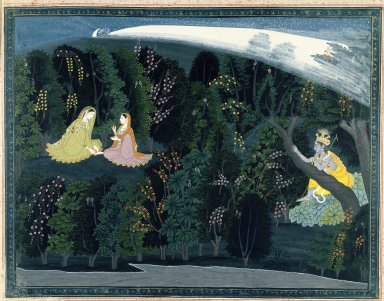
Radha, Krishna and Sakhi, Kangra style painting based on Geet Govind.
Government Museum, Chandigarh

Abhinaya in Kathak is majorly presented in the framework of various genres of classical as well as some semi-classical genres of songs and poetry. This framework of the composition enables the dancer to blend the nuances of expressions with enrapture of rhythm. While Thumri rules the emotive expression in Kathak;  many other genres of Geeti are presented in Kathak too. These include devotional genres like bhajans and stotras, as well as some semi-classical genres like Chaiti, Kajri, Hori and so on. This list remains incomprehensive unless rare genres such as Dhrupad, Chaturang and Ashtapadi are also acknowledged.
Ashtapadi is rarely found within Kathak performances today. However this genre plays an important role to train Kathak dancers, especially to imbibe Abhinaya. This owes to the content of the Ashtapadis and the length of eight stanzas, both being a challenge for dancers. This article investigates the following:

1. Ashtapadi as a genre: Origin and development
2. Astapadi in Kathak
3. Can we label any song with eight stanzas as Ashtapadi?

1. The genre Ashtapadi: Origin and development
The literal meaning of the word Ashtapadi is a song with eight stanzas, however, any song whatsoever with mere eight stanzas cannot be labelled as Ashtapadi. The term Ashtapadi is prevalent from Jayadeva’s Geetgovind. Many compositions with eight stanzas existed within the Vedas and Puranas but were never termed as Ashtapadi in the tradition before and after Jayadeva.
Jayadeva, the ‘Shringar-Saraswat’ as he has titled himself in his work, has pioneered the genre Ashtapadi in the mainstream literature in his iconic work Geetgovind. The songs in Geetgovind are known as Ashtapadis in the literary as well as in the musical tradition. Although, Jayadev himself does not use the name Ashtapadi, he calls them Prabandhas. The word Prabandha is a common term used in Carnatic music with the general meaning of ‘a composition’. Jayadeva dropped the typical formats as well as metres of established Sanskrit Literature and instead used the format and metres, then popular in Prakrit languages, especially Apabhramsha. It is a possibility that this particular genre named Ashtapadi (amorous poetry of eight stanzas) was popular in Prakrit literature of the era that Jayadev adopted in Sanskrit. Someshwara talks about a poetry form called Charya-geet of the Buddhist poet Siddhacharya in his rhetoric work Manasollas. They resemble the Ashtapadi’s. Hence, we can conclude that similar Ashtapadi compositions were already popular in Prakrit literature and Jayadeva may be the first one to experiment them in Sanskrit.
Indian. <em>Krishna Gazes Longingly at Radha, Page from the "Lumbagraon Gita Govinda" Series</em>, ca. 1820-1825. Opaque watercolor and gold on paper, sheet: 11 1/8 x 14 3/8 in.  (28.3 x 36.5 cm). Brooklyn Museum, Designated Purchase Fund, 72.43 (Photo: Brooklyn Museum, 72.43_IMLS_SL2.jpg)
Sakhi playing the role of messenger between Radha and Krishna

(Lumbagraon Gita Govinda" Series, Brooklyn Museum)

Geetgovind is the amorous poetry of Radha and Krishna’s divine love. The story unfolds with the three characters namely Krishna, Radha, and Sakhi. These ballads of love comprehend all the shades of Shringara and all the stories of Ashtanayikas. As the name suggests, Geet-Govind has ‘Geeta’, the songs with melody and these are not mere verses for recitation. These songs are composed in their specific raag and taal within their framework. Jayadeva himself used to sing these ballads of love and his wife Padmavati used to present them in dance. Hence, we can infer that these songs were composed with the purpose of musical and dance presentation.
After Jayadeva, the word Ashtapadi was particularly used for the songs from Geetgovind. Today, almost all the styles of classical dance present this form called Ashtapadi. These Ashtapadi’s are major part of Abhinaya in Odissi. Although, they present Ashtapadis composed by Jayadeva himself. The Odissi style uses many other songs from Oriya language, such as the songs penned by Oriya poet Kavisurya composed on the lines of Geetgovind. However, they are not termed as Ashtapadis in the performance. Jayadeva’s compositions are performed and are known as Ashtapadi’s.
After Jayadeva’s Ashtapadis were widely recognized and popularised, many compositions were composed on a similar line. Poet Raamapani composed Geet-Raamam where he has composed Ashtapadis centering lord Rama. Mahakavi Vidyapati Thakur was a Maithili poet who was then known as Abhinava Jayadeva since he composed Geetgovind-like pada’s in Sanskrit and in Maithili. Chaitanya Mahaprabhu was attracted to Geetgovind, after reading Maithili Ashtapadis of Vidyapati. Gujarati poet Narsi Mehta wrote Shringar Mala. In the eighteenth century, Swami Narayan Teerth composed Krishna-Leela-tarangini following the format of Geetgovind. However, all these poets while composing Ashtapadi or similar poetry format have acknowledged that they are following the tradition of Jayadeva.
The Ashtapadis of Jayadeva are extensively prevalent in southern India. This genre went on to become a type of Prabandha (composition) in Carnatic music and also became an inevitable part of some rituals. Even a particular dance-drama style stemmed from Ashtapadis and was named as Ashtapadi-attam. One more dance-drama called as Krishna-natta, is based on Ashtapadis composed by the poet Shree Manaveda, in which Ashtapadis are presented in eight parts on eight nights. Dancers are taking efforts to rejuvenate both these rare styles. The video below shows the rejuvenated, refurbished form of Ashtapadi-attam, which has characters of Radha and Krishna, also Jayadeva himself and his wife are seen as characters denoting the how synonymous Ashtapadi is with Jayadeva.


Ashtapadi had found a prominent place in Hindustani Vocal music till the beginning of the 20th century in the Gwalior Gharana. Bade Balkrishna buva began to present the verses of Ashtapadi in the format similar to
Chhota Khyal as the closing part of the main Khyal performance. He was followed by many artists from his Gharana and many Ashtapadis of Jayadeva were presented as a bandish. However, it is noteworthy that only Ashtapadis of Jayadeva were used by them in the tradition of Gwalior gharana.
Thus, Ashtapadi is not a general term for any song with eight stanzas but Ashtapadi in itself is a tradition commencing from Jayadeva, extended over centuries in music, dance, literature and even painting.

Ashtapadi as performed in Kathak:    
We cannot trace the historic timeline of Ashtpadi being encompassed in the Abhinaya literature of Kathak or when Kathak dancers incorporated this genre in the performance. Kathak dancers today present many Ashtapadis from Geet-govind. Chandan charchit neel kalevar and Lalit lavang lata are the two Ashtapadis popularly presented in Kathak. Today Kathakars mainly perform the Ashtapadi penned by the doyen Kathak legend and poet Bindadin Maharaj, Niratat Dhang. This same composition is presented as a general song or bhajan in some Kathak traditions where they do not particularly name this as an Ashtapadi. Hence, one cannot conclusively claim if this song was originally composed as an Ashtapadi or was later named as one due to adherence to the format of Ashtapadi. Nevertheless, this composition does have many specifications of Ashtapadi. This has eight stanzas in the same metre that describe the ancient form of Rasleela-Kathak, the divine dance of Krishna-Radha and gopis, and through this, describe the various aspects of Kathak style. The sthayi ‘Niratat dhang’ is repeated after every stanza, denoting that the theme of graceful romantic dance as stated in the words ‘niratat dhang’ is extended in every stanza in the romance of Krishna, in the description of Radha and in the charming dance of gopis. One more Ashtapadi composition is famous in the Kathak dancers specially belonging to the Jaipur Gharana. This composition Nand nandan nachat sudhang is accredited to Sant Surdas. The theme of this composition is as per Ashtapadi norms but only two stanzas are known and performed. It is interesting to note that this composition accredited to Surdas is famous in Kathak, but this composition does not have any reference in the Hindi literature and Surdas literature. 

Ashtapadi and Ashtaka:
Can we label any song with eight stanzas as Ashtapadi?
Often Kathakars and Kathak students are confused with these two different poetry forms namely Ashtapadi and Ashtaka. Ashtaka is the name for the Stotra with eight stanzas. Ashtakas are more ancient than Ashtapadis. An Ashtaka praises the deity in eight stanzas of the same meter. There are similar sub-categories in Stotra literature with different numbers of stanzas such as Shatak for six, Ekadash for eleven etc.
The Khand Kavya or Laghu Kavya is divided into two sub-types namely emotive and devotional. Ashtapadi belongs to the emotive category and Ashtaka belongs to the devotional category.
(Of course, the first Ashtapadi of Jayadeva, Jay Jagdish Hare can be considered as an exception, since the particular composition is the opening song and hence it is devotional as per the tradition). Technically Ashtapadi can be called Dwi-dhatu-prabandh. Dwi-dhatu has one Pallavi and many charanas or one sthayi and many antaras. Also, a part of Sthayi repeats after every antara. Ashtaka may or may not have this repetition.
Antyanupras, the rhyme at the end of the line is transpires in Ashtapadi but no such rule exists for an Ashtaka. Basically, Ashtapadi is a song genre composed for melodious singing as Ashtaka is a type of stotra created for recitation.
Thus, Ashtaka and Ashtapadi are two different forms and Shree-krishnashtak, MAdhurashtak cannot be incorporated under the form of Ashtapadi, neither any general eight stanza song can be called as Ashtapadi. In fact, Jayadev himself does not stick to the number eight. Some Ashtapadis in Geetgovind have stanzas more than or less than eight. Even the further Ashtapadi compositions have not strictly followed the stanza number as eight. The Ashtapadi was prevalent in the vocal tradition of Gwalior Gharana. Even there, the artists considered the sthayi and one antara of Ashtapadi as a small bandish and developed it like Chhota Khyal. Thus even this tradition did not stress or impose upon the number of stanzas being eight. To summarise, a song with eight stanzas is a highly generic definition of Ashtapadi. Ashtapadi is a definite tradition and the songs in this or following this tradition can be called as Ashtapadi.
Analyzing the Ashtapadi as reflected and presented in Kathak, we can sum up the following characteristics that are specific to an Ashtapadi:
1.  Ashtapadi should be composed by Jayadeva or should be one following his tradition.
2.  The song has eight stanzas and a portion of Sthayi is repeated after every stanza. This repeated portion of sthayi denotes the theme of Ashtapadi that is further developed in stanzas.
3.  The subject matter revolves around Shringar or Madhura Bhakti. The song has a theme of a particular storyline or event. The song is not about general praise or description.
Currently, Ashtapadi is studied in theory than practiced in actual performances. The mammoth length of eight stanzas may be the reason that limits its potential to appeal to the audience. Since we have proven that the numeric factor of the number  ‘eight’ in the context of Ashtapadi is insignificant, Kathakars can choose two to three stanzas as per the theme of Ashtapadi and can work out a smaller presentation suitable for the viewer. Ashtapadi can also be utilized in innovative ways to make it a different genre in the Abhinaya of Kathak.
The charming romance of Radha and Krishna in the Ashtapadis is in line with the flavor of other compositions of Kathak. Hence an Ashtapadi can be further enhanced by adding relevant Kavitta-chhandas as well as suitable Gatnikas and sometimes, small Gatbhavs. Even a small stanza of Ashtapadi can be added at the beginning of an extensive thumri like the Shayari introduces Gazal in the beginning.
The path of rejuvenation of Kathak from the stagnancy of blind rigidity of tradition is two-fold. Firstly, we can experiment novel unseen ideas and secondly, we can refurbish the older concepts in the manner that it adapts the freshness of modernity on one hand and adheres to the traditional framework on the other. Presenting Ashtapadi in an innovative manner can be a good example of the second.